

🔒 Always double-check security and privacy implications.
⚙️ Use tools, software, and methods at your own discretion.
How AI can simplify grocery shopping and meal planning in ways that save you hours every week. If you’ve ever stood in front of your fridge wondering what to cook or thrown out wilted vegetables you forgot about, you’re not alone. But here’s the good news: artificial intelligence is changing how we shop, plan, and eat—making the whole process easier and smarter.
- Why Grocery Shopping Gets So Complicated
- How AI Can Simplify Grocery Shopping and Meal Planning
- Smart Features That Make Life Easier
- Smart Shopping Features
- Cutting Down on Food Waste
- Real People, Real Results
- Getting Started With AI Tools
- What to Expect Next
- My Experience & Insights
- Pantry-to-Meal Generator
- Frequently Asked Questions
Why Grocery Shopping Gets So Complicated
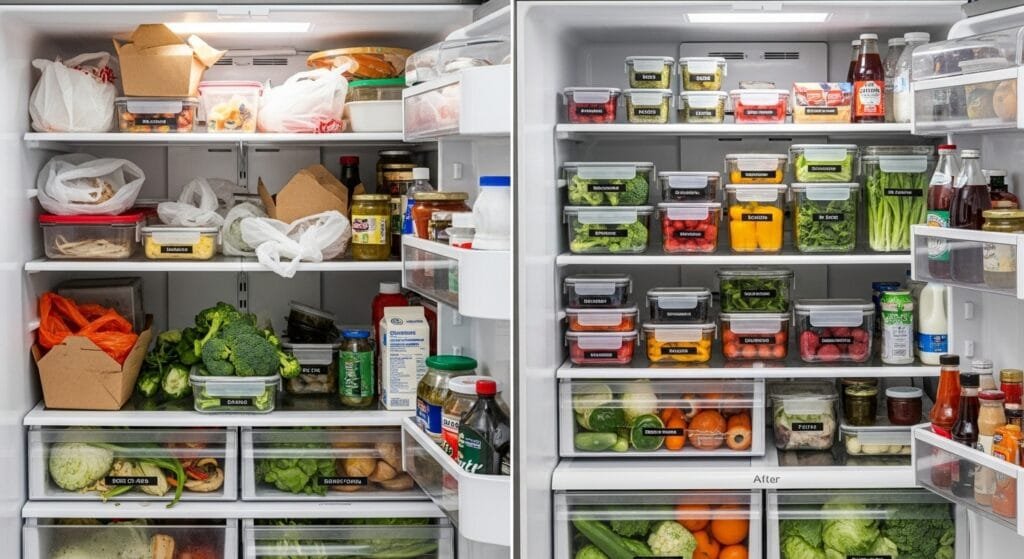
Most of us struggle with meal planning because life gets busy. Between work, family, and everything else, figuring out what to eat for the week can feel overwhelming. You might buy too much food that spoils, or you grab random ingredients without a real plan. Research shows that online grocery shopping can actually increase food waste because shoppers feel less connected to their purchases when they don’t physically pick them out.
Dr. Veronika Ilyuk, an assistant professor of marketing and international business at Hofstra University, points out that when you don’t put effort into selecting products yourself, you feel less responsible for them. That makes it easier to toss things in the trash later. Traditional meal planning takes a lot of mental energy, and that’s where AI steps in to help.
How AI Can Simplify Grocery Shopping and Meal Planning
AI-powered tools work like a personal assistant for your kitchen. They learn what you like to eat, track what’s already in your pantry, and create shopping lists that match your needs. These smart systems analyze your habits over time and get better at suggesting meals you’ll actually want to cook.
AI grocery list generators take the guesswork out of shopping by considering your dietary restrictions, past purchases, and favorite meals. Instead of writing lists by hand or forgetting key ingredients, the AI does it for you automatically. It even helps reduce waste by reminding you to use items before they expire.
One major benefit is personalization. Apps now use machine learning to analyze your shopping history and preferences, then recommend products that fit your lifestyle. If you always buy organic vegetables or avoid gluten, the system remembers and adjusts your lists accordingly.
Smart Features That Make Life Easier
AI meal planners offer features that go way beyond simple recipe suggestions. Here’s what sets them apart:
Smart Shopping Features
| Feature | How It Helps | Example |
|---|---|---|
| Photo-to-list conversion | Turn photos of recipes or ingredients into shopping lists instantly | Snap a picture of a magazine recipe and the app adds everything you need |
| Real-time inventory tracking | Know exactly what’s in your pantry without checking | Apps alert you when items run low or are about to expire |
| Personalized recommendations | Get meal ideas based on your health goals and tastes | Systems suggest recipes that match your diet—keto, Mediterranean, vegan, etc. |
| Smart substitutions | Find alternatives when ingredients aren’t available | If spinach is sold out, the app suggests kale or Swiss chard instead |
| Dynamic grocery lists | Lists update automatically when you change meal plans | Add a new dinner recipe and the shopping list adjusts in real time |
These tools save time and brainpower. Studies on AI nutrition systems show they can generate highly accurate weekly meal plans by combining your measurements, medical conditions, and energy requirements with established nutrition guidelines.
Cutting Down on Food Waste
Food waste is a huge problem—each year, more than 130 billion pounds of food is lost or wasted in the U.S., with the average family throwing away $1,500 in groceries. AI helps tackle this by optimizing your shopping and tracking what you already have. Smart grocery apps led to 40% fewer abandoned shopping carts for one grocery chain because the AI made better product suggestions.
When your fridge knows what’s inside and reminds you to use items before they spoil, you waste less. Some systems even suggest recipes based on ingredients you need to finish. That means fewer trips to the store and less money thrown away.
Wageningen University research found that better inventory management in supermarkets reduced food waste by 17.4% between 2018 and 2022. The same principles work at home—when you know what you have and plan accordingly, waste drops.
Real People, Real Results
The AI meal planning market is growing fast—projected to reach $11.5 billion by 2034, growing from $972.1 million in 2024. That’s because people are actually using these tools and sticking with them. About 60% of users keep using meal planning apps after the first month, which is pretty impressive for any tech product.
What makes AI meal planners work? They adapt to your life. Research on AI-powered dietary coaching showed that chatbot-based systems improved user adherence to nutrition plans by 32% compared to traditional counseling. The AI offers continuous, context-aware feedback that feels personal and supportive.
People also like the variety. Advanced AI systems can pull from huge recipe databases and suggest meals from different cuisines based on your health conditions, preferences, and what’s in season. This keeps dinner interesting instead of falling into the same rotation of five recipes.
Getting Started With AI Tools
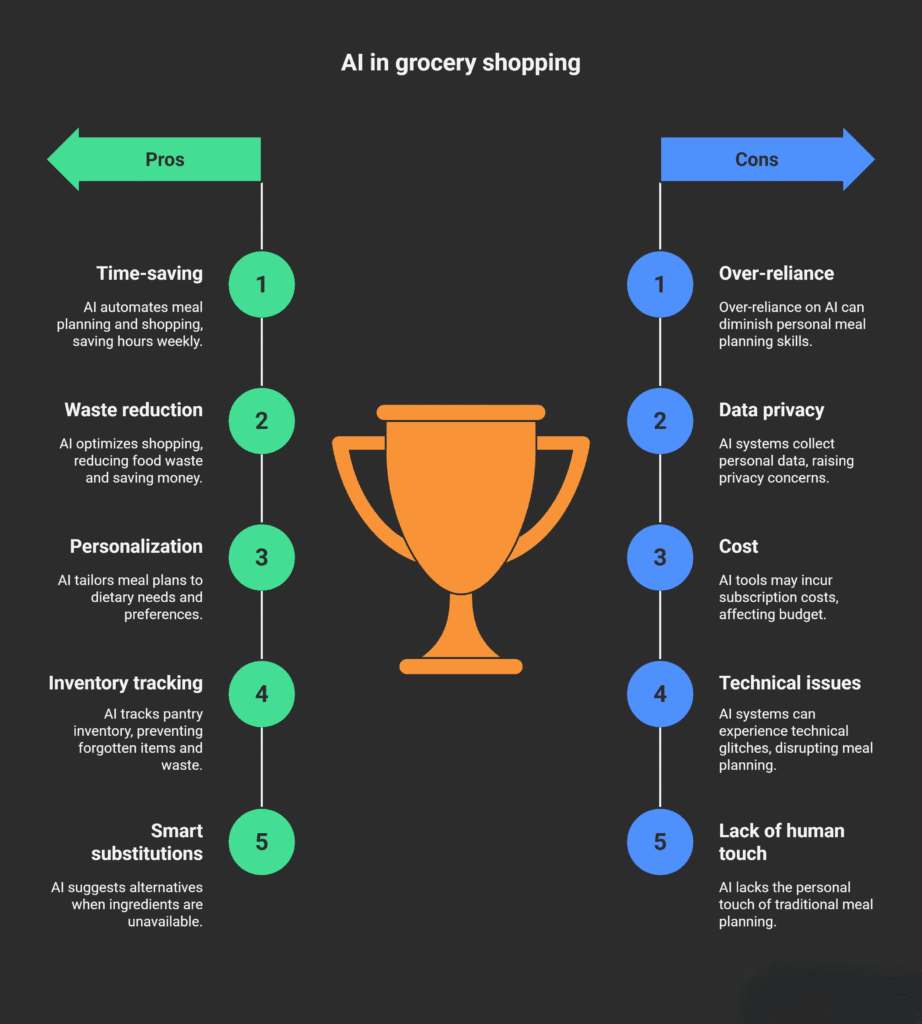
You don’t need to be tech-savvy to use AI grocery and meal planning apps. Most are designed for regular people who just want to eat better and save time. Here’s how to begin:
- Download an app or use meal planning features in existing platforms
- Input your dietary preferences, allergies, and favorite foods
- Let the system track what you buy for a few weeks to learn your patterns
- Review the suggested meal plans and adjust as needed
- Use the auto-generated shopping lists at the store or for online orders
Smart grocery lists now update in real time and work on both mobile apps and printable PDFs. Nutrition professionals are using these tools with clients because they’re more adaptable than old-school paper lists.
Voice assistants like Alexa and Google Assistant can add items to your list hands-free while you’re cooking. And some refrigerators are starting to integrate AI features that track inventory and reorder items automatically when you run low.
What to Expect Next
AI grocery and meal planning technology keeps improving. Future systems will connect even more closely with fitness trackers and health apps, creating a complete picture of your wellness. Research into AI nutrition recommendations shows these systems can now perform tasks comparable to registered dietitians in clinical settings.
The technology is getting smarter about understanding natural language, so you can ask questions like “What can I make with chicken and broccoli?” and get instant recipe ideas. It’s becoming more conversational and less robotic.
One thing to remember: AI is a tool, not a replacement for your own judgment or professional advice. Liz Weinandy, a dietitian and instructor at The Ohio State University, recommends using AI for inspiration and efficiency but still consulting with nutrition experts for complex health conditions. The best approach combines AI convenience with human expertise.
AI takes the stress out of answering “What’s for dinner?” every night. It organizes your shopping, reduces waste, and personalizes meals to fit your life. Whether you’re trying to eat healthier, save money, or just spend less time planning, these smart tools make grocery shopping and meal prep simpler than ever before.
My Experience & Insights
While researching AI’s impact on grocery shopping, I noticed something interesting: most people struggle not with meal ideas, but with using what they already have. A 2022 study on smartphone apps and food waste found that apps helping people track pantry inventory reduced waste by up to 30%, but many were too complicated for everyday use.
That’s what inspired me to build the Pantry-to-Meal Generator—a simple tool that turns your random ingredients into real recipes. You just list what’s sitting in your fridge or pantry (maybe chicken, bell peppers, and rice), add any dietary restrictions (gluten-free, vegetarian, whatever), and it instantly generates custom recipe ideas. If you’re missing an ingredient or two, it creates a quick shopping list so you only buy what you actually need.
I’ve been using this approach myself for about six months now, and it’s cut my grocery spending by roughly 20%. More importantly, I’m not throwing away half a bag of spinach every week anymore. The tool works by combining ingredient-matching algorithms with nutritional guidelines—similar to what registered dietitian Liz Weinandy describes when she talks about using AI as a “brainstorming partner” rather than a replacement for professional advice.
One thing I learned through building this: AI meal planning works best when it’s flexible. Real life means you get home late, find out the store was out of avocados, or realize your kid suddenly hates broccoli. The systems that succeed aren’t the ones with perfect meal plans—they’re the ones that adapt quickly. That’s why I built in smart substitutions, so if you’re missing something, the tool suggests alternatives that work with the same cooking method and flavor profile.
What surprised me most during my research was how much mental load meal planning actually creates. A University of Michigan study on household food management found that the average person spends 37 minutes per day just thinking about food-related decisions. That’s over four hours a week spent wondering what’s for dinner. When you automate the “what do I have” and “what can I make” parts, that mental burden drops dramatically.
The best part? You don’t need fancy smart appliances or expensive subscriptions. Whether you use my Pantry-to-Meal Generator or another AI tool, the key is consistency. Give the system two weeks to learn your habits, and you’ll start seeing real time savings and less food waste. It’s not about being perfect—it’s about making the daily grind of feeding yourself (or your family) a little bit easier.
Pantry-to-Meal Generator
Turn ingredients you have into delicious meal ideas instantly
Your Personalized Meal Ideas
Frequently Asked Questions
How can AI help me save money while grocery shopping?
AI-powered shopping apps can compare prices across stores, alert you to sales, and suggest budget-friendly alternatives based on your shopping habits and preferences. This helps you stick to your budget and avoid unnecessary purchases.
Will AI grocery apps work with my dietary restrictions or allergies?
Yes, most AI grocery and meal planning tools allow you to set dietary preferences and flag allergies. They’ll personalize recommendations, recipes, and shopping lists to ensure you only see foods that fit your needs.
Can I use AI to create meals with ingredients I already have at home?
Absolutely—tools like Pantry-to-Meal Generators help you input the ingredients you have on hand and instantly generate recipe ideas, reducing food waste and unnecessary shopping.
How does AI help reduce food waste in my household?
AI grocery apps track pantry inventory, remind you before foods expire, and suggest recipes using items you need to use up. This proactive approach helps you buy only what you need and make the most of what you have.
Is my grocery data safe when I use AI-powered apps?
Most reputable AI grocery shopping apps use secure encryption and anonymize your shopping history. Always review privacy policies and choose apps from trusted providers for added peace of mind.
Can I connect AI grocery apps with smart home devices and delivery services?
Yes, you can often link your AI app to smart fridges, voice assistants like Alexa, and delivery platforms, so meal planning, shopping, and ordering groceries happens smoothly and automatically from your favorite devices.
🔒 Always double-check security and privacy implications.
⚙️ Use tools, software, and methods at your own discretion.