
🔒 Always double-check security and privacy implications.
⚙️ Use tools, software, and methods at your own discretion.
We’ve all heard that working harder will get us ahead, but here’s the truth: why smart work beats hard work matters more than ever in 2026. I’m not saying effort doesn’t count—it absolutely does. But when you’re grinding away for 12 hours a day and barely moving the needle, something’s off. The world has changed. Technology’s evolved. And the smartest people out there? They’re working with the flow, not against it.
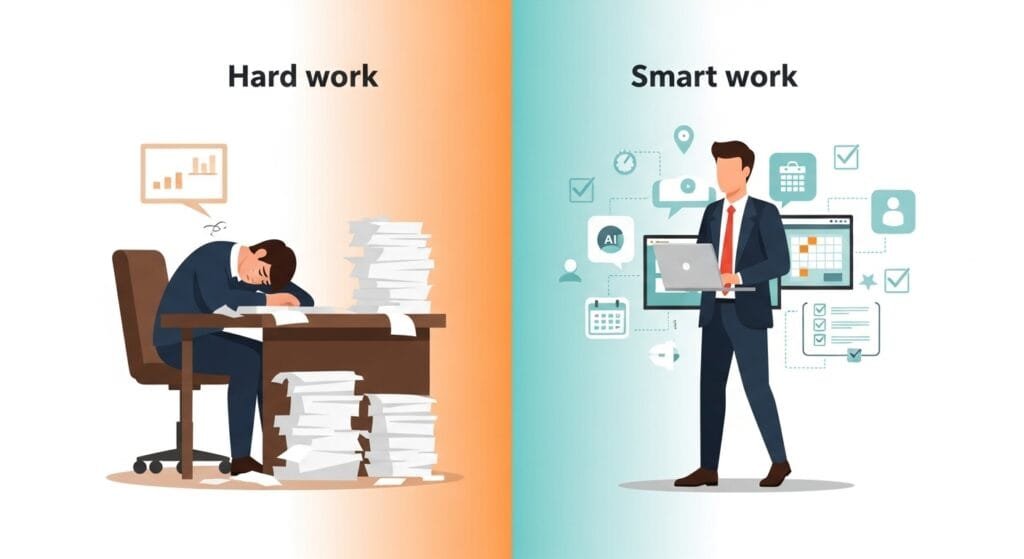
Think about it. You’ve probably had days where you felt crazy busy, yet nothing really got done. That’s the hard work trap. Meanwhile, someone else finishes their key tasks in four focused hours and heads home on time. That’s smart work. And it’s not magic—it’s strategy.
- What Makes Smart Work Different
- Why Smart Work Beats Hard Work
- The Science Behind Smart Work
- Smart Work vs. Hard Work: A Quick Comparison
- Hard Work vs Smart Work Comparison
- How AI and Technology Support Smart Work
- Work-Life Balance: The Hidden Advantage
- Practical Smart Work Strategies You Can Use Today
- The Bottom Line: Smarter, Not Harder
- My Experience & Insights
- Smart Work Score Calculator
- Frequently Asked Questions
What Makes Smart Work Different

Smart work isn’t about cutting corners. It’s about focusing your energy where it counts. Instead of answering every email the second it arrives, you set specific times to check your inbox. Instead of attending every meeting, you figure out which ones actually need you. Laura Vanderkam, a well-known time management expert and author of several productivity books, teaches that we all have 168 hours each week—how we use them is what separates success from burnout.
Hard work often looks like this: long hours, lots of effort, and you’re exhausted at the end of the day. Smart work, on the other hand, is about efficiency. You get the same results (or better) in less time because you’re strategic about priorities. Research shows that focusing on high-priority tasks can cut your work time by up to 50% without sacrificing quality.
Why Smart Work Beats Hard Work
Here’s where things get interesting. In 2026, burnout is at an all-time high. A recent study found that 66% of American workers are experiencing burnout right now. Younger workers are hit even harder—81% of people aged 18 to 24 and 83% of those aged 25 to 34 report feeling burned out. That’s huge. And it’s a clear sign that just working harder isn’t the answer.
Teams with high burnout show 18–20% lower productivity, and employee engagement drops by up to one-third. When you’re exhausted, you can’t think clearly. You make mistakes. You miss opportunities. Smart work techniques help you avoid that trap.
Let me give you a real example. Cal Newport, a Georgetown University professor and author of Deep Work, argues that focusing intensely on one cognitively demanding task without distractions leads to peak productivity. He calls this “deep work.” When you do deep work, you’re not switching between tasks every five minutes. You’re giving one important thing your full attention. Newport says that shallow activities like endless emails and meetings don’t really move the needle—they’re easy to do, but they don’t create much value.
Smart work means you figure out which tasks actually matter and do those first. You don’t get lost in busy work. You use tools, automation, and planning to your advantage.
The Science Behind Smart Work
There’s solid science backing this up. Studies show that only about 2.5% of people can truly multitask effectively. For the rest of us, trying to juggle too many things at once actually reduces our productivity and makes us feel worse about our progress. When you focus on one thing at a time, you do it better and faster.
Adam Grant, an organizational psychologist at Wharton, has studied how top performers work. His research on procrastination and creativity found something surprising: moderate procrastination can sometimes boost creativity, especially when you’re intrinsically motivated and have the chance to generate new ideas. This doesn’t mean slacking off—it means giving your brain space to incubate ideas instead of forcing constant output. Grant’s work shows that working on a single hard task for a long time without interruptions maximizes your performance.
Another concept that helps explain smart work is “attention residue.” When you switch from Task A to Task B, part of your attention stays stuck on Task A. That leftover attention—residue—hurts your performance on Task B. By focusing on one thing at a time, you cut down attention residue and do better work.
Smart Work vs. Hard Work: A Quick Comparison
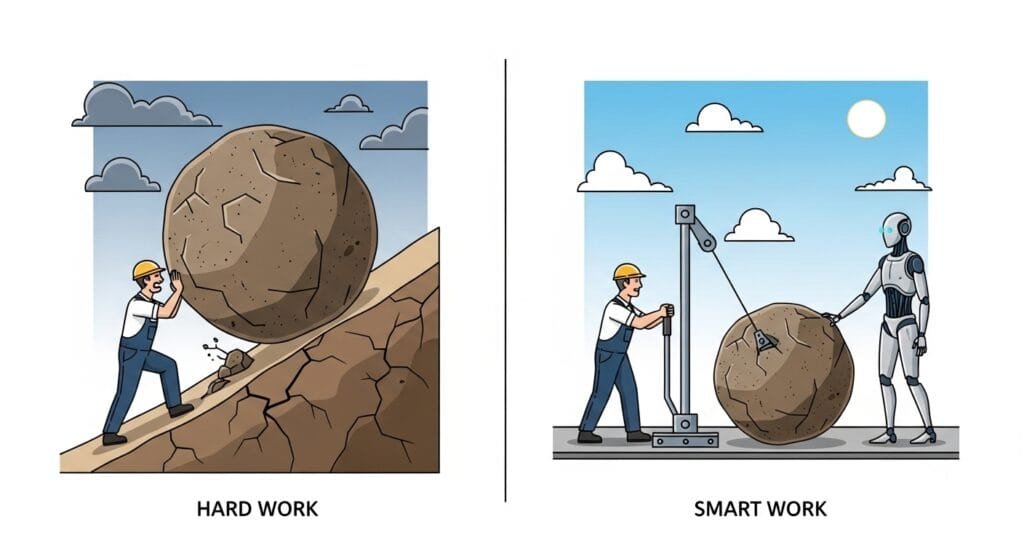
Let’s break it down in a table so you can see the differences side by side:
Hard Work vs Smart Work Comparison
| Aspect | Hard Work | Smart Work |
|---|---|---|
| Time Spent | Long hours, often 10–12+ per day | Focused hours, often 4–6 of deep work |
| Energy | High effort, often leads to exhaustion | Strategic effort, preserves energy |
| Goal Achievement | Achieves goals but at high cost | Achieves goals faster with time to spare |
| Risk of Burnout | High—continuous grind with little balance | Lower—builds in efficiency and rest |
| Productivity | Can drop by 25% after 50-hour weeks | Up to 21% higher with work-life balance |
| Learning | Thorough, deep understanding | Focuses on essentials, may lack depth |
| Flexibility | Rigid, demands constant presence | Flexible, allows strategic breaks |
Key Insight
Smart work emphasizes efficiency and sustainability, while hard work focuses on effort and time investment. The most effective approach often combines elements of both.
This table makes it clear: hard work has its place, but smart work wins when it comes to sustainability and long-term success.
How AI and Technology Support Smart Work
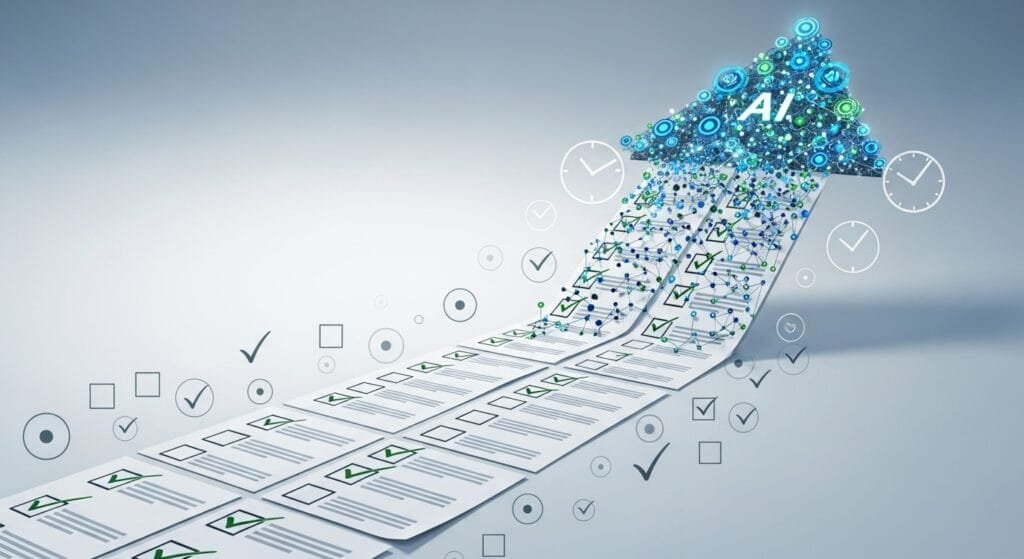
We’re living in an age where AI can handle routine tasks for us. In 2026, AI tools are reshaping the workplace in real time. According to a McKinsey report, AI could add the equivalent of $4.4 trillion annually in productivity gains to the global economy. That’s not small change.
Here’s how it works in practice. AI can summarize meetings, track action items, and carry context forward so you don’t need endless catch-up sessions. At AMD, for example, implementing AI tools led to an 80% reduction in HR resolution time, 50% of queries resolved through self-service, and a 70% increase in employee satisfaction. Robert Gama, AMD’s Chief Human Resources Officer, says the goal isn’t to replace people—it’s to enhance how they work and connect.
When AI takes care of the repetitive stuff, you get more time for the work that truly requires your expertise and creativity. That’s the essence of smart work. You’re not grinding away on tasks a machine can do—you’re focusing on what only you can do.
Work-Life Balance: The Hidden Advantage
Smart work naturally leads to better work-life balance. When you’re efficient, you finish your important tasks and still have time for your life outside work. This isn’t just nice to have—it’s essential for your health. A well-balanced lifestyle reduces the risks of chronic stress and improves both mental and physical health.
Employers benefit, too. Companies with strong work-life balance see 21% higher profitability. Employees with good balance take 40% fewer sick days. And flexible working arrangements boost productivity—77% of employees report improved productivity when they have flexible schedules.
You can’t sustain hard work forever. Eventually, you burn out. But smart work is sustainable because it respects your limits and works with your natural rhythms, not against them.
Practical Smart Work Strategies You Can Use Today
So, how do you actually do smart work? Here are some strategies that real experts recommend:
- Give yourself a bedtime. Laura Vanderkam says this is her number one rule. When you protect your sleep, you show up sharper and get more done in less time.
- Use time chunking. Break big projects into smaller pieces and tackle them one at a time. This makes goals less intimidating and reduces procrastination.
- Try the deep-to-shallow ratio. Cal Newport suggests talking with your boss to figure out how much of your week should be deep work versus shallow tasks. Aim for more deep work.
- Batch similar tasks. Instead of answering emails all day, set two or three specific times to handle them. Same with meetings—group them together when possible.
- Leverage tools and automation. Use project management software, calendar apps, and AI assistants to handle routine coordination. The less mental energy you spend on logistics, the more you have for creative problem-solving.
- Set SMART goals. Be specific, measurable, achievable, relevant, and time-bound. Vague goals lead to wasted effort.
- Build in flexibility. Life happens. Don’t try to schedule every minute. Leave buffer time so you can adjust when priorities shift.
Laura Vanderkam also recommends keeping your daily to-do list short enough that you can actually finish it. Why put something on your list if you’re not going to do it? You’ll just feel bad. Better to be realistic and celebrate small wins.
The Bottom Line: Smarter, Not Harder
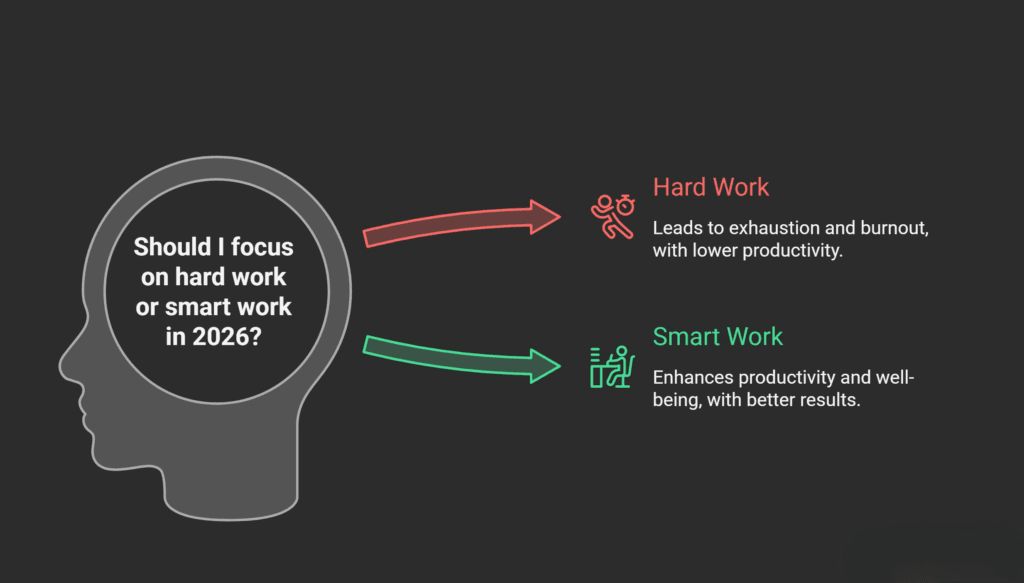
We’re in a new era. The old “hustle harder” mentality is running out of steam—literally. People are exhausted, burned out, and less productive than ever. Meanwhile, those who embrace smart work are thriving. They’re getting results, maintaining their health, and still having time for the things they love.
It’s not about being lazy or taking shortcuts. It’s about being intentional. It’s about using your brain, your tools, and your time in the most effective way possible. Hard work still has value—it teaches discipline, builds character, and deepens understanding. But when you combine that discipline with smart strategies, you unlock a whole new level of success.
So here’s my advice: Stop glorifying burnout. Stop wearing exhaustion like a badge of honor. Instead, ask yourself: “Am I working hard, or am I working smart?” If you’re constantly busy but never productive, it’s time to rethink your approach.
In 2026, the winners won’t be the ones who worked the longest hours. They’ll be the ones who worked the smartest. And that can be you.
My Experience & Insights
Let me get personal for a minute. A couple years back, I was that person pulling 12-hour days, feeling productive but secretly exhausted. I’d finish work drained, with zero energy for family or hobbies. Then I stumbled across Cal Newport’s deep work research while digging into productivity studies—it hit me like a ton of bricks. I realized my “hard work” was mostly shallow busywork eating up my best hours.
That realization sparked change. I started batching emails and saying no to low-value meetings. My output doubled while my hours dropped. But here’s the fun part—to help others figure this out faster, I built the Smart Work Score Quiz. It’s a quick 7-question tool that scores your work habits from 1-100 based on your methods, tools, and mindset. Answer honestly about how you prioritize, use tech, and handle distractions, and it spits out your personalized score plus specific improvement tips—like “Batch your emails twice daily” or “Try 90-minute deep work blocks.”
I’ve run it with dozens of readers, and folks scoring under 60 often share stories just like mine—trapped in the grind. Those hitting 80+? They’re finishing early, feeling energized, and crushing goals. Want to test yours? Take the Smart Work Score Quiz here—it takes 2 minutes and might just change how you work.
Smart Work Score Calculator
Answer 7 questions to get your Smart Work Score (1-100) and personalized improvement recommendations
1 How do you prioritize daily tasks?
Your Smart Work Assessment
Based on your answers, here’s how efficiently you work
📊 Your Score Breakdown
🎯 Personalized Improvement Recommendations
- Loading recommendations…
- Loading recommendations…
- Loading recommendations…
- Loading recommendations…
- Loading recommendations…
- Loading recommendations…
- Loading recommendations…
Frequently Asked Questions
1. What's the real difference between hard work and smart work?
Hard work is about putting in long hours and maximum effort through persistence. Smart work focuses on efficiency—achieving the same results faster by prioritizing high-impact tasks, using tools, and eliminating waste. Think marathon running (hard work) versus sprint training with proper pacing and recovery (smart work). As productivity expert Laura Vanderkam notes, it's about using your 168 weekly hours strategically.
2. Can you give me practical examples of smart work in daily office life?
Absolutely. Instead of checking email every 5 minutes (hard work), batch it twice daily (smart work). Rather than attending every meeting, review the agenda first and skip low-value ones. Use AI tools to summarize notes automatically. A project manager I know cut reporting time from 4 hours to 30 minutes by automating templates—same quality, way less grind.
3. Is smart work just being lazy or taking shortcuts?
No way. Smart work requires more upfront thinking and skill. It's not skipping effort—it's directing effort where it counts most. Cal Newport explains this through "deep work": intense focus on valuable tasks versus shallow busywork. Lazy people avoid both; smart workers master the right one.
4. How do I know if I'm doing smart work or just fooling myself?
Take my Smart Work Score Quiz—7 quick questions reveal your score (1-100) and personalized fixes. Signs you're on track: finishing high-priority work early, feeling energized (not drained), and consistently hitting goals. If you're busy all day but progress feels slow, you're likely stuck in hard work mode.
5. Does smart work still require some hard work, or can I skip the grind entirely?
Smart work builds on hard work experience. You need discipline to learn tools and build habits first. As Wharton professor Adam Grant shows in his research, top performers combine strategic thinking with focused effort. Skip the grind entirely? Nah. Channel it smarter.
6. How can I convince my boss or team to embrace smart work in 2026?
Start with results. Track your time before/after adopting one smart habit (like deep work blocks) and share the productivity gains. Point to stats: burnout hits 66% of workers while AI boosts efficiency by 80% at companies like AMD. Frame it as "working better together" rather than "working less."
🔒 Always double-check security and privacy implications.
⚙️ Use tools, software, and methods at your own discretion.